

Picture this.
It’s the 1950s.
You’re tired. You’re hungry. You’re in your car.
You don’t want a menu. You don’t want small talk.
You just want food – now.
Most restaurants made you wait.
McDonald’s didn’t.
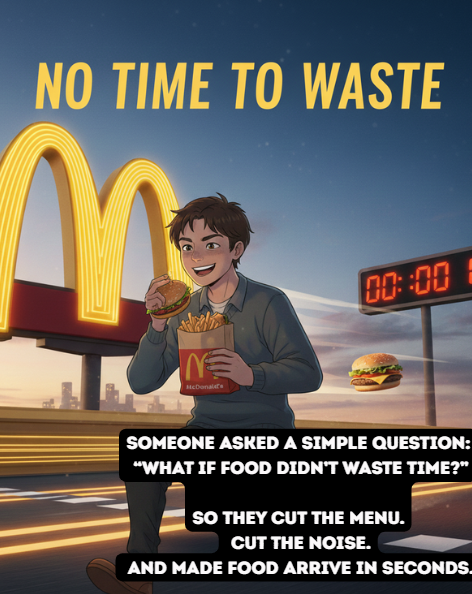
Someone looked at that frustration and thought:
“What if food didn’t waste people’s time?”
And that one thought quietly changed the world.
Let’s be honest.
No one goes to McDonald’s thinking,
“Wow, this is gourmet.”
Yet somehow:
- it’s everywhere 🌍
- it’s always busy ⏱️
- and millions of people eat there every single day
So how did McDonald’s actually grow this big?
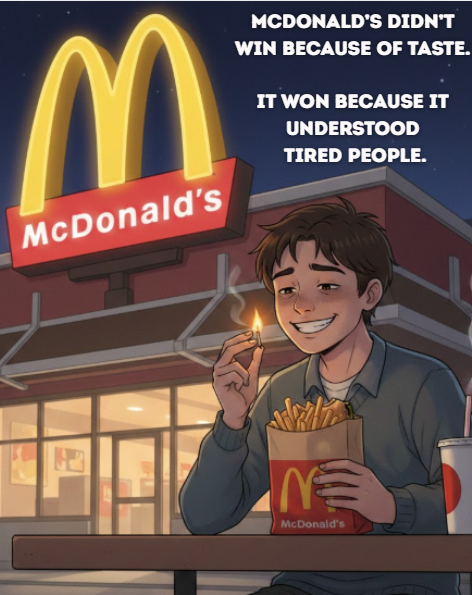
Not with taste.
Not with trends.
But by understanding how tired humans think.
🚗 The Real Problem People Had (Back Then)
America in the 1940s–50s was changing fast:
- People had cars 🚘
- Families were busy 👨👩👧
- Everyone was in a hurry ⏳
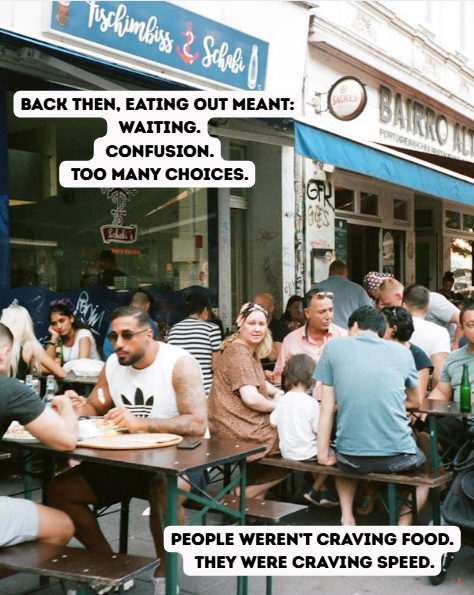
Eating out was annoying:
- You waited too long
- Orders got messed up
- Too many choices
- Too much effort
People didn’t want better food.
They wanted food that was fast, cheap, and predictable.
McDonald’s listened.
⚙️ The One Decision That Changed Everything (1948)
The McDonald brothers did something radical.
They asked:
“What if food worked like a factory?”
So they:
- Cut the menu down ✂️
- Removed waiters
- Removed plates
- Removed confusion
Each worker did one small job only.
Like an assembly line.
Result?
🍔 Your burger came in under a minute.
This wasn’t a restaurant anymore.
It was a system.
⏱️ Why Speed Was the Real Superpower
When food is fast:
- You don’t think much
- You don’t hesitate
- You don’t get annoyed
Your brain goes:
“Okay cool, this works.”
McDonald’s respected people’s time, and people rewarded it with loyalty.
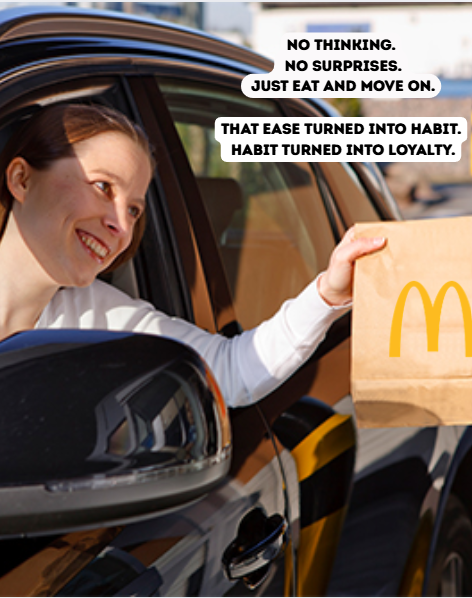
🚗 Drive-Thru = Genius (Not Laziness)
McDonald’s noticed something simple:
People didn’t want to get out of their cars.
So they built for cars, not vibes.
Drive-thru meant:
- No seating problems
- More orders per hour
- Parents + kids = stress-free
Today, in many countries, most McDonald’s orders come from drive-thru.
They didn’t make life aesthetic.
They made it easier.
🧸 Comfort Made It a Habit
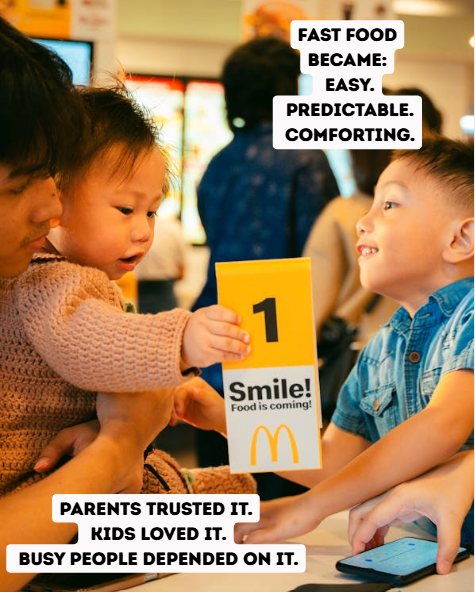
McDonald’s didn’t try to look fancy.
It tried to feel:
- Safe
- Familiar
- Kid-friendly
Parents trusted it.
Kids loved it.
Travellers relied on it.
When people are tired, they don’t experiment.
They repeat what feels safe.
That’s how McDonald’s became a habit, not a craving.
🌍 Same Everywhere, But Still “Local”
McDonald’s went global – but smartly.
Yes, menus changed:
- Paneer burgers in India
- Teriyaki in Japan
But everything else stayed the same:
- Same colors
- Same speed
- Same system
So wherever you were, your brain thought:
“I know this place.”
And comfort travels faster than culture.
🧠 The Simple Truth
McDonald’s didn’t win hearts with food.
It won minds by removing effort.
No thinking.
No waiting.
No surprises.
Just:
“Eat. Go. Continue life.”
🏁 Final Raw Real Hrit Take
Most empires are loud.
McDonald’s wasn’t.
It didn’t convince people.
It didn’t impress people.
It didn’t even try to be loved.
It simply showed up when people were tired, busy, late, or overwhelmed.
And when something keeps making life easier,
you stop questioning it.
You just keep going back.
That’s how McDonald’s didn’t just grow –
it settled into everyday life.
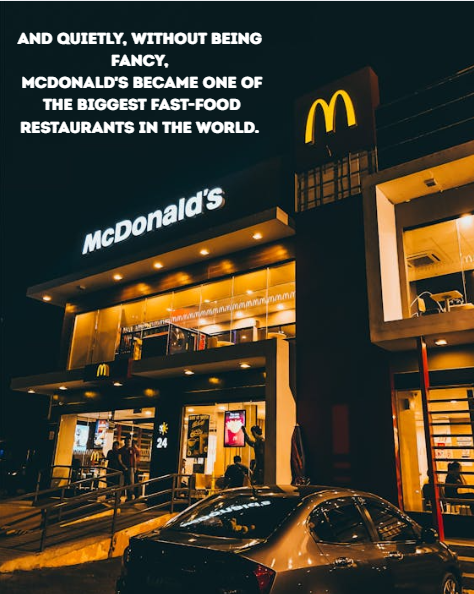
And without trying to be special,
without being fancy,
it quietly became the biggest fast-food restaurant in the world.
 Raw. Real. Hrit.
u r superb 🥰😍🤩
LikeLike
mcd is my fav brand
LikeLike
Yah actually its the first thing anyone thinks when they had a tiring day! Such an easy yet a famous dish- Burger! legit crazy!
LikeLike