

Once you see it… you really can’t unsee it.
Welcome back to Raw Real Hrit – where we quietly expose the mind games brands play, while sipping iced coffee and pretending we’re not also victims of the “Add to Cart” demon.
Let’s be honest:
You think you’re making choices.
Brands think they’re making you.
And most days?
Brands are right.
Because modern marketing isn’t about selling products anymore.
It’s about selling psychology – your reactions, your impulses, your shortcuts, your emotional glitches.
Let’s break down the tricks brands hope you never notice 👀✨
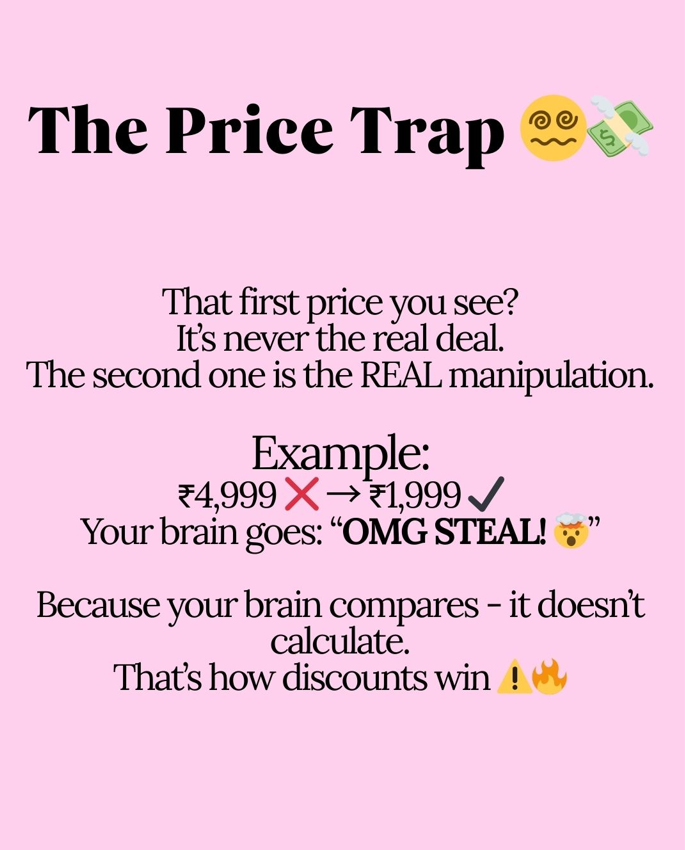
🪤 1. The Price Trap: Anchoring 101
You know that first price you see?
₹4,999 ❌ → ₹1,999 ✔️
Your brain immediately goes: OMG steal.
That’s not your rational brain talking – that’s psychology.
Brands use anchoring, a cognitive bias where your brain fixates on the first number it sees.
You don’t calculate value – you compare.
So the first price isn’t actually meant to sell the product.
It’s meant to make the second price look irresistible.
📄 2. The Long Description Illusion
Let’s be honest – nobody reads those painfully long product descriptions.
Not me.
Not you.
Not even the brand manager who wrote it.
But here’s what does happen:
Your brain sees a long wall of text and automatically thinks:
“Wow… they wrote A LOT. Must be legit.”
This is called the illusion of explanatory depth – your brain confusing volume with credibility.
In short:
More words = more trust
Even when those words mean absolutely nothing.
Marketing = 1
Human brain = 0
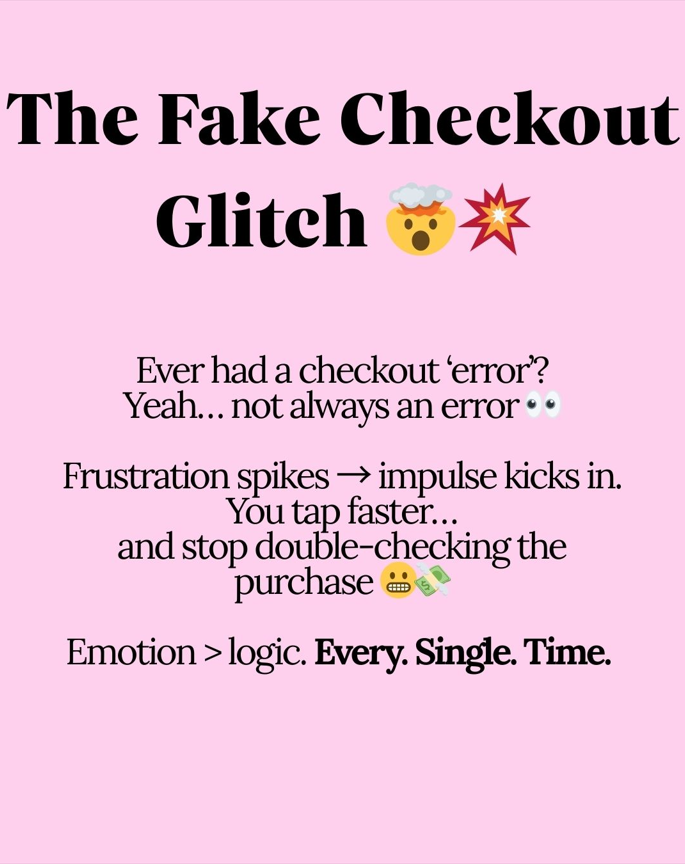
🤯 3. The Fake Checkout Glitch
You add something to your cart, go to checkout, and suddenly –
“Oops! Something went wrong.”
Did it though?
Sometimes yes.
Sometimes no.
Annoying you at checkout is a known behavioral nudge.
When frustration spikes – impulse kicks in.
You tap faster… and stop double-checking.
Your emotional brain takes over, and your logical brain goes on a coffee break.
In psychology terms:
Emotion > logic. Every. Single. Time.
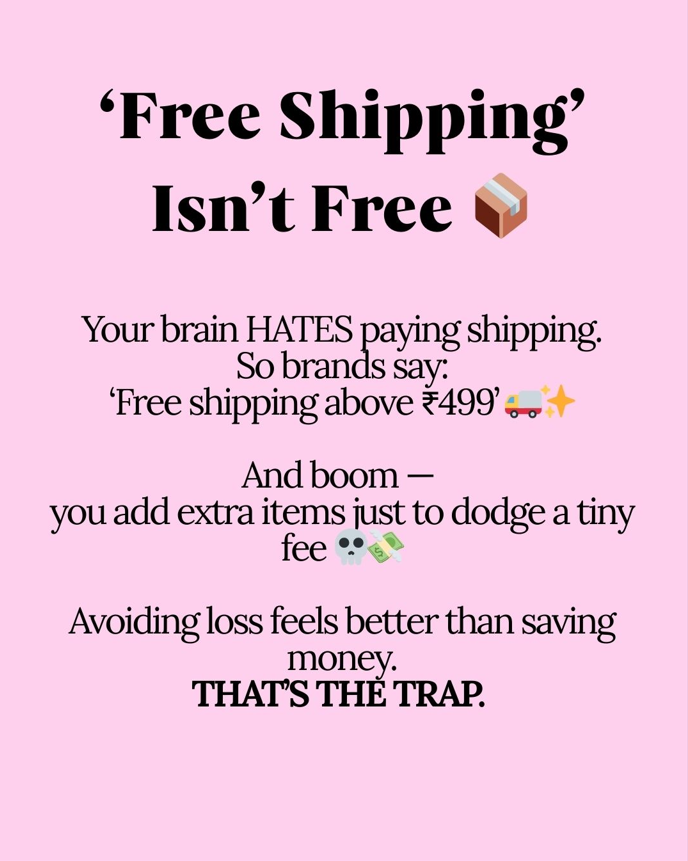
📦 4. Free Shipping… Isn’t Really Free
Your brain HATES paying for shipping.
Like, irrationally hates it.
So brands say:
“Free shipping above ₹499.”
And suddenly you’re adding lip balm, stickers, and a notebook you’ll never use just to avoid paying a ₹49 fee.
This is loss aversion – losing money feels worse than spending more.
You don’t save money.
You just buy extra things to avoid feeling “cheated.”
That’s the trap.
And yes… we all fall for it.
🧠 5. The Invisible Pattern Behind All These Tricks
Brands don’t rely on discounts.
They rely on predictable human behavior.
Your shortcuts.
Your impulses.
Your emotional triggers.
Marketing isn’t manipulating you maliciously – but it is built on understanding how your brain works on a lazy day.
And trust me – your brain has a lot of lazy days.
💬 So what now?
Now you see the invisible strings.
Now you know the patterns.
And once you notice these tricks… it’s almost impossible to go back to shopping on autopilot.
⭐ If you liked this breakdown:
- Save this for your next online shopping spree
- Share it with that friend who always gets hacked by “limited-time offers”
- And follow along – because this is just the beginning.
More psychology.
More marketing truths.
More decoding the world around us.
Welcome to Raw Real Hrit.



🙂
LikeLiked by 1 person
🙂
LikeLiked by 1 person
hahaha yess
LikeLiked by 1 person