

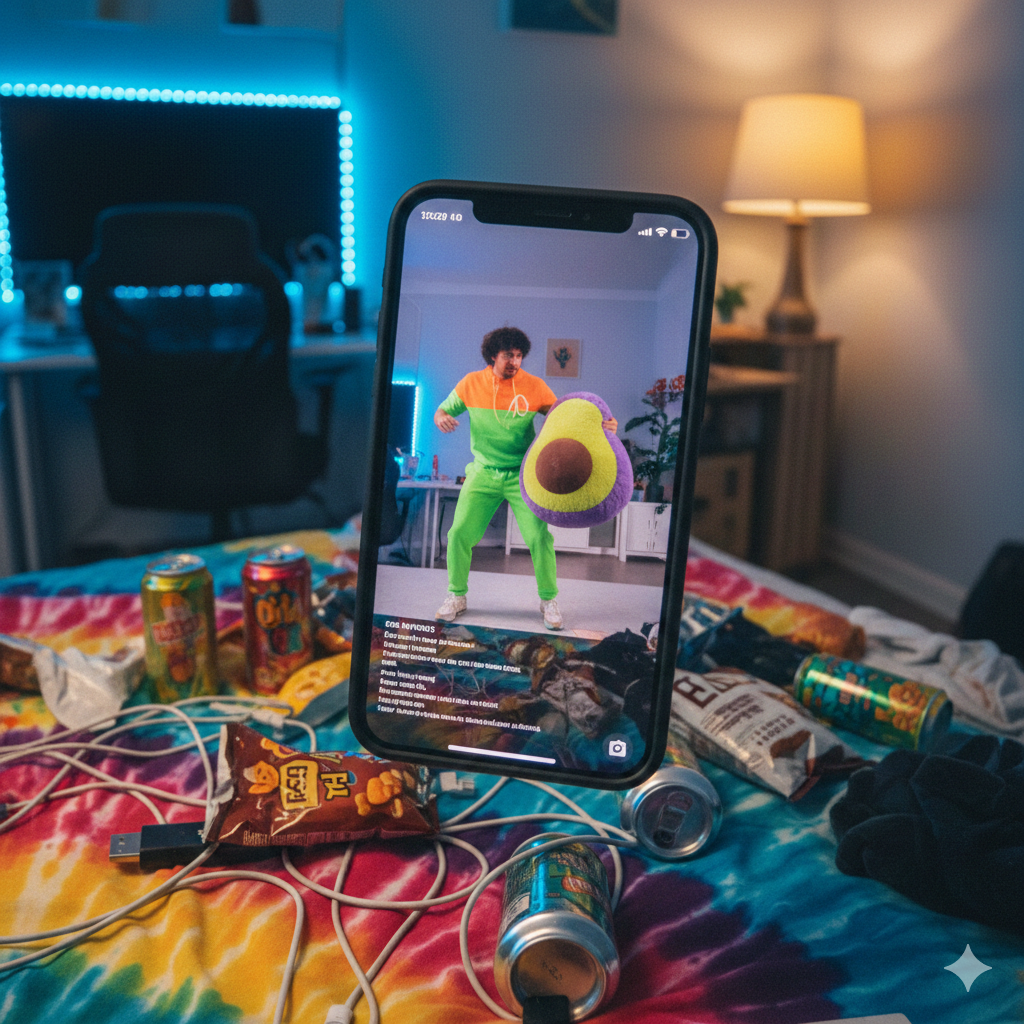
Some of the best-performing ads right now look like they were made in five minutes.
Bad lighting.
Weird framing.
Typos.
No CTA.
And somehow, they work better than million-rupee campaigns 😐
This isn’t accidental.
It’s psychology at play.
The brain hates being marketed to 🚫📢
The moment something looks like an ad, our brain puts its guard up.
We scroll faster 📱
We doubt more 🤨
We resist 🧱
So brands do something smarter.
They remove the signals that scream “marketing”.
When something feels unpolished, our brain reads it as real.
And real feels safe 🫶
Effortlessness signals honesty ✨😌
Highly produced content feels strategic.
Strategic feels calculated.
Calculated feels suspicious.
Low-effort content does the opposite.
It feels like:
- “They didn’t try too hard”
- “This wasn’t planned”
- “This must be genuine”
Psychologically, we associate effortlessness with confidence 🧠
If a brand doesn’t need to impress you, your brain assumes it already has value.
That’s status signalling in disguise 👀
Ugly ads bypass resistance 👁️📉
There’s a reason messy ads perform insanely well on social media.
They don’t trigger ad fatigue 😵
They blend into organic content 🌀
They look like something a friend would post 💬
When an ad doesn’t look like an ad, your brain doesn’t activate skepticism mode.
You don’t evaluate it.
You experience it.
And once you’ve experienced something, persuasion has already happened ⚡
What this looks like in the real world 👀✨
This isn’t theory. You’ve already seen it play out.
Take Duolingo on social media 🦉📱.
Their content is loud, awkward, badly framed, and borderline chaotic. It doesn’t look like a brand trying to teach you anything. It looks like an internet personality that happens to exist. That messiness lowers your guard before you even realise you’re being marketed to.
Or look at Ryanair ✈️😬.
Their memes are low quality, self-aware, and sometimes intentionally ugly. Instead of defending themselves, they joke about their flaws. When a brand laughs at itself first, criticism loses its power and trust increases.
Then there’s BeReal 📸🕒.
No filters. No retakes. Bad lighting by design. The entire product is built around imperfection. That constraint signals honesty, and honesty feels refreshing in a feed trained on perfection.
Even in fashion, brands like Zara 🖤 keep things distant and under-explained. Minimal captions. Cold visuals. No emotional chasing. Psychologically, brands that don’t try too hard feel higher status.
None of this is lazy marketing.
It’s intentional imperfection designed to make marketing feel invisible 🎭
“Bad” marketing feels human 🧍♀️💭
Humans aren’t symmetrical.
They make mistakes.
They ramble.
They overshare.
Perfect branding feels corporate 🏢
Imperfect branding feels human 🤍
That’s why:
- Typos feel authentic
- Casual captions feel honest
- Awkward delivery feels trustworthy
Your brain fills in the gaps with empathy 🤝
Instead of thinking “This brand wants my money”, you think
“This feels relatable”.
That shift is everything 🔁
When imperfection becomes a strategy 🎬🧩
Here’s the uncomfortable truth.
Once too many brands start doing “authentic”, authenticity becomes manufactured.
The messy ad becomes a formula.
The casual tone becomes a script.
The “we don’t care” aesthetic becomes intentional.
But even then, it still works 😬
Because the brain responds to the feeling, not the intent.
We’re not falling for bad marketing.
We’re falling for familiarity.
Why this works especially well on Gen Z 📱🧠
Gen Z grew up inside ads.
They can smell persuasion instantly 👃
So brands adapt.
They stop selling.
They start blending.
The goal isn’t to convince you.
It’s to make you forget you’re being convinced 😶🌫️
That’s why the most powerful marketing today doesn’t look like marketing at all.
The real takeaway 🎯🪞
Brands aren’t becoming worse at marketing.
They’re becoming better at hiding it.
And the moment you stop noticing the technique,
the technique has already worked.
Tell me, what is your favourite “bad marketing” campaign and why? Let’s discuss it in the comments. ✨
 Raw. Real. Hrit.
Very insightful!
LikeLike
the best ads are effortless
LikeLike